
Figma
Competitor analysis
Branding
Lovable
Figma Make
V0 Vercel
Prototyping
User flows
Testing
Wireframing
High fidelity mockups
Personas
Journey mapping
Information Architecture
In August 2025, I rebuilt Alcove Closets brand and website end-to-end to read as truly luxurious and convert more visitors. I rebuilt positioning, voice, visual identity, page architecture, and the component system, so the promise “designed at your table, installed fast, backed for life” is obvious in the first scroll.
I used Figma for a tightly-structured design system, Lovable and V0 for fast design exploration, custom illustrations, and a CRO-first content model so every section has a measurable job.
My design was led to treat “luxury” as restraint plus proof. Instead of decorating the brand, I framed it: fewer choices, clearer evidence, and placement of the right promises before the user asks.
Every decision had to either increase clarity, reduce time to decision, or elevate perceived quality; if it didn’t do one of those, it didn’t ship.
82%
Increase in conversions
Increase in conversions
29%
29%
Increase in engagement time
Increase in engagement time
44%
44%
Increase in hero CTA clicks
Increase in hero CTA clicks
Before (scrollable view)
Before (scrollable view)

Driving a 60% Increase in Online Orders for Sumachay Lifts Through Data-Driven UX Optimization
Driving a 60% Increase in Online Orders for Sumachay Lifts Through Data-Driven UX Optimization
After (scrollable view)
After (scrollable view)

Love being a know-it-all?
Let me walk you through my process
Love being a know-it-all?
Let me walk you through my process
Love being a know-it-all?
Let me walk you through my process
Problem
Alcove's website felt generic, indecisive, and light on proof. The brief was threefold:
Create the brand from scratch
Reach two distinct buyer personas: first-home upgraders and downsizing retirees
Make the company look as reputable online as they are in homes by installing a CRO spine into the layout: time certainty, value clarity, service etiquette, and lifetime backing
Approach
I defined "what must be true in the first 10 seconds" and work backward.
A credible luxury brand in this category must show:
Exact service model (in-home design)
Specific timeline (~10 days, not "fast")
Manufacturing origin (USA)
Coverage (lifetime)
Fair price context
Constraints
We needed to show "what's included" and "how fast" without a phone call. Putting those truths above the fold became non-negotiable. Everything on the page needed to scream speed, clarity, and white-glove care.
The journey began with creating a type system, colour palette, iconography, micro-illustrations, image treatment, spacing, and grid.
Research
Stakeholder Interviews
I started with stakeholder interviews to distill service DNA, objections, and the on-site experience clients actually rave about.
I mapped two jobs-to-be-done:
Reduce hassle while getting a boutique result (30s buyers)
Achieve long-term serenity with respectful install and low-maintenance materials (60s buyers)
I needed all the information I could get to surface pain points: timeline uncertainty, install mess, overwhelming choices, unclear price ranges, skepticism about "custom."
Competitive Analysis
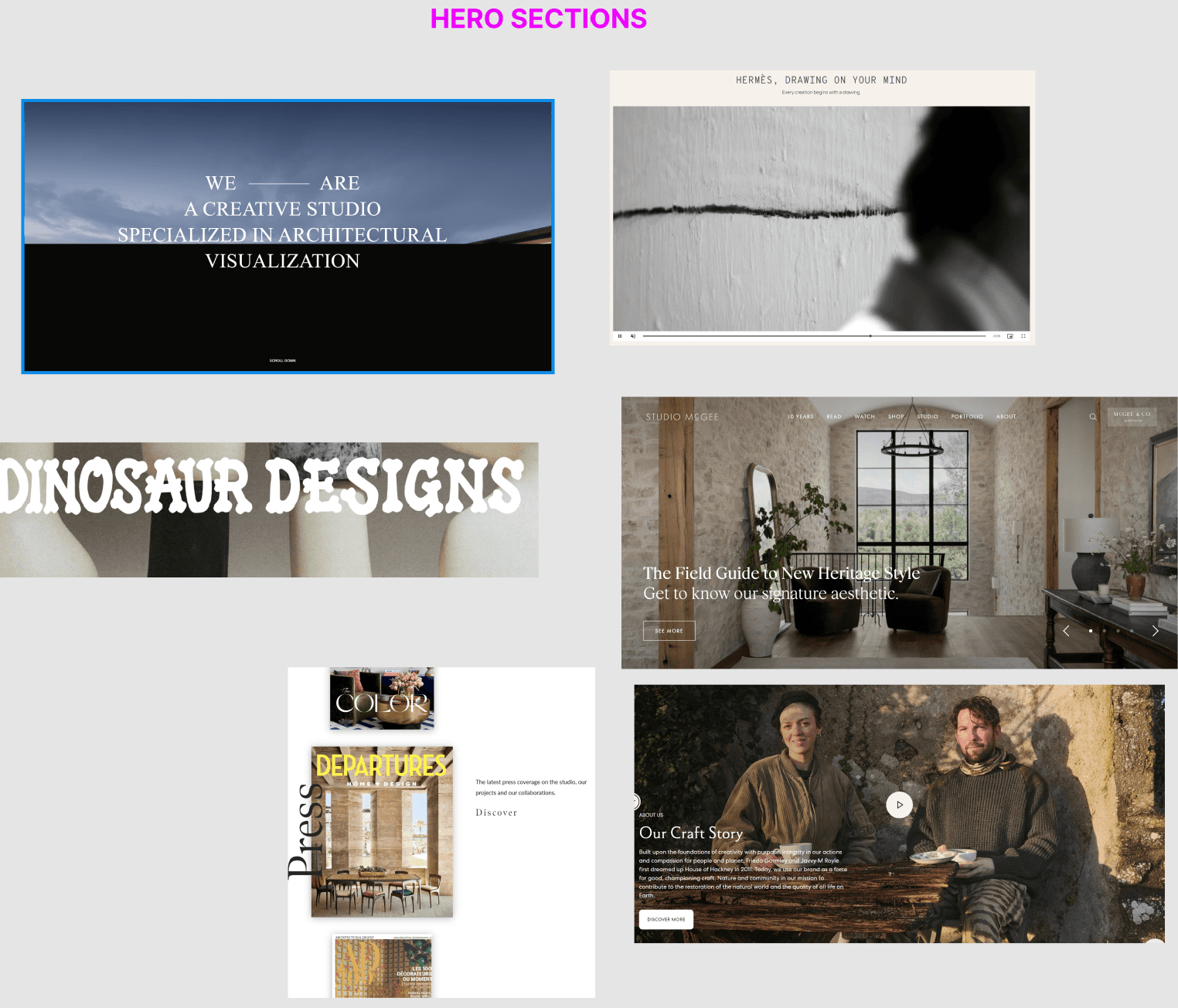
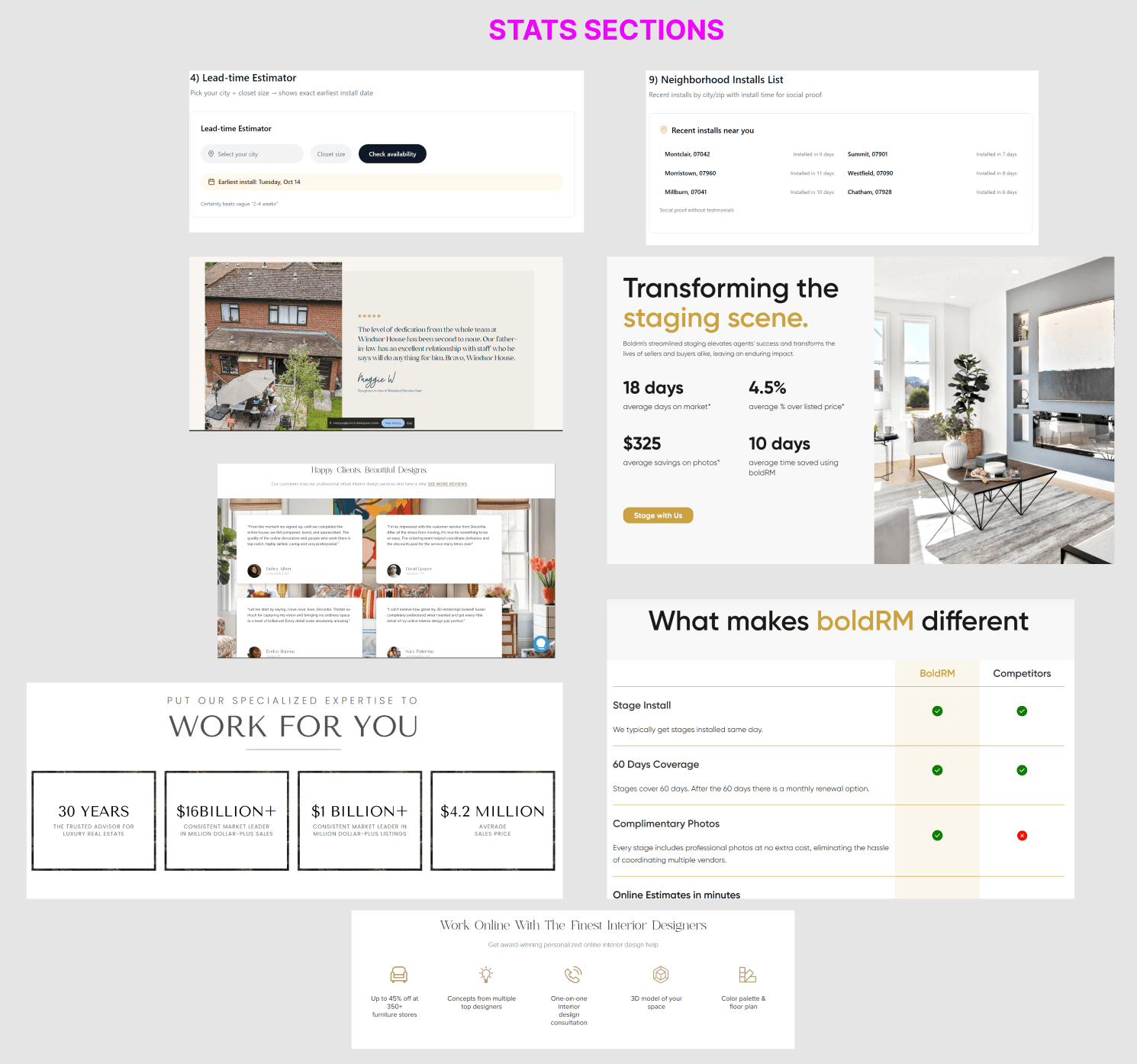
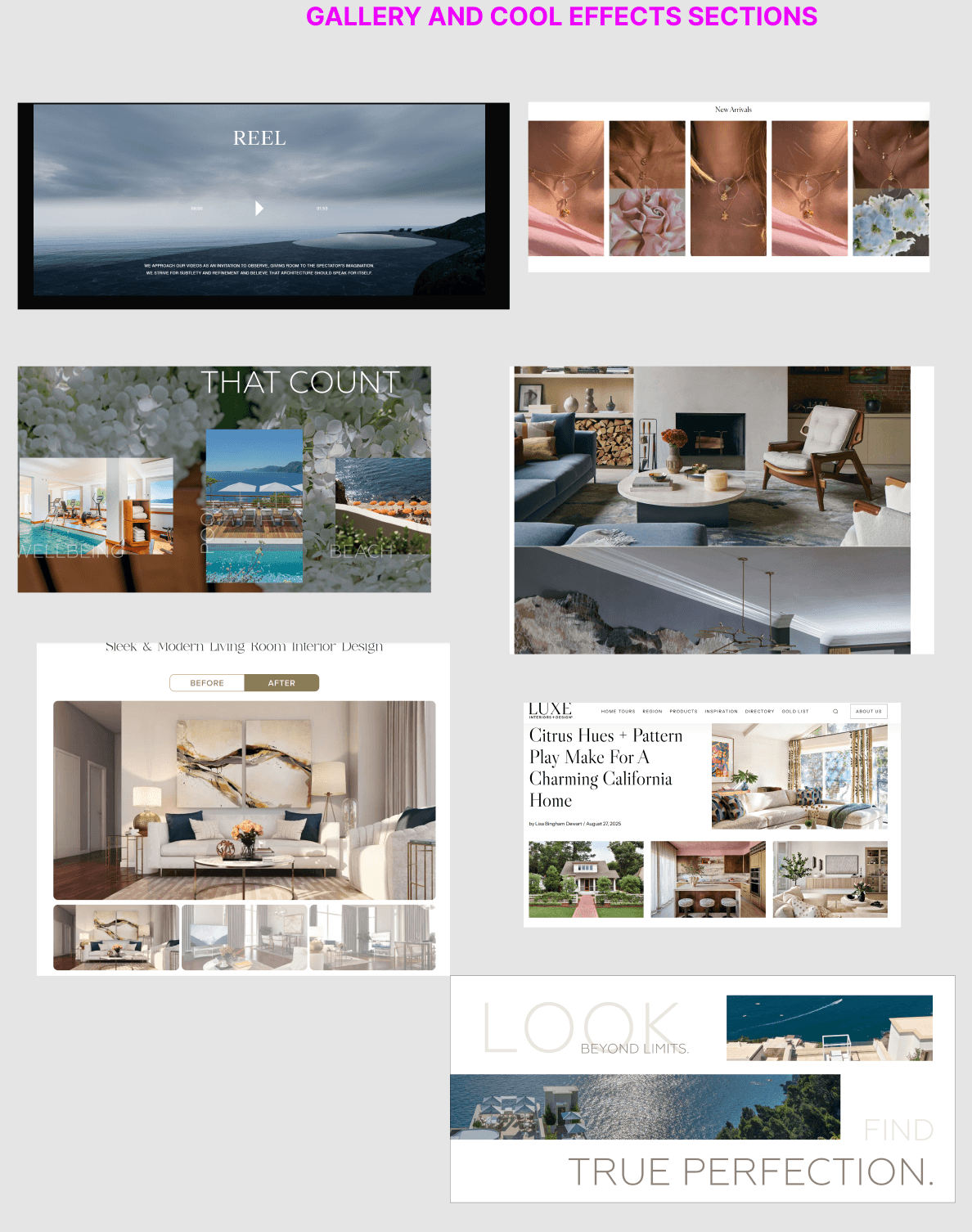
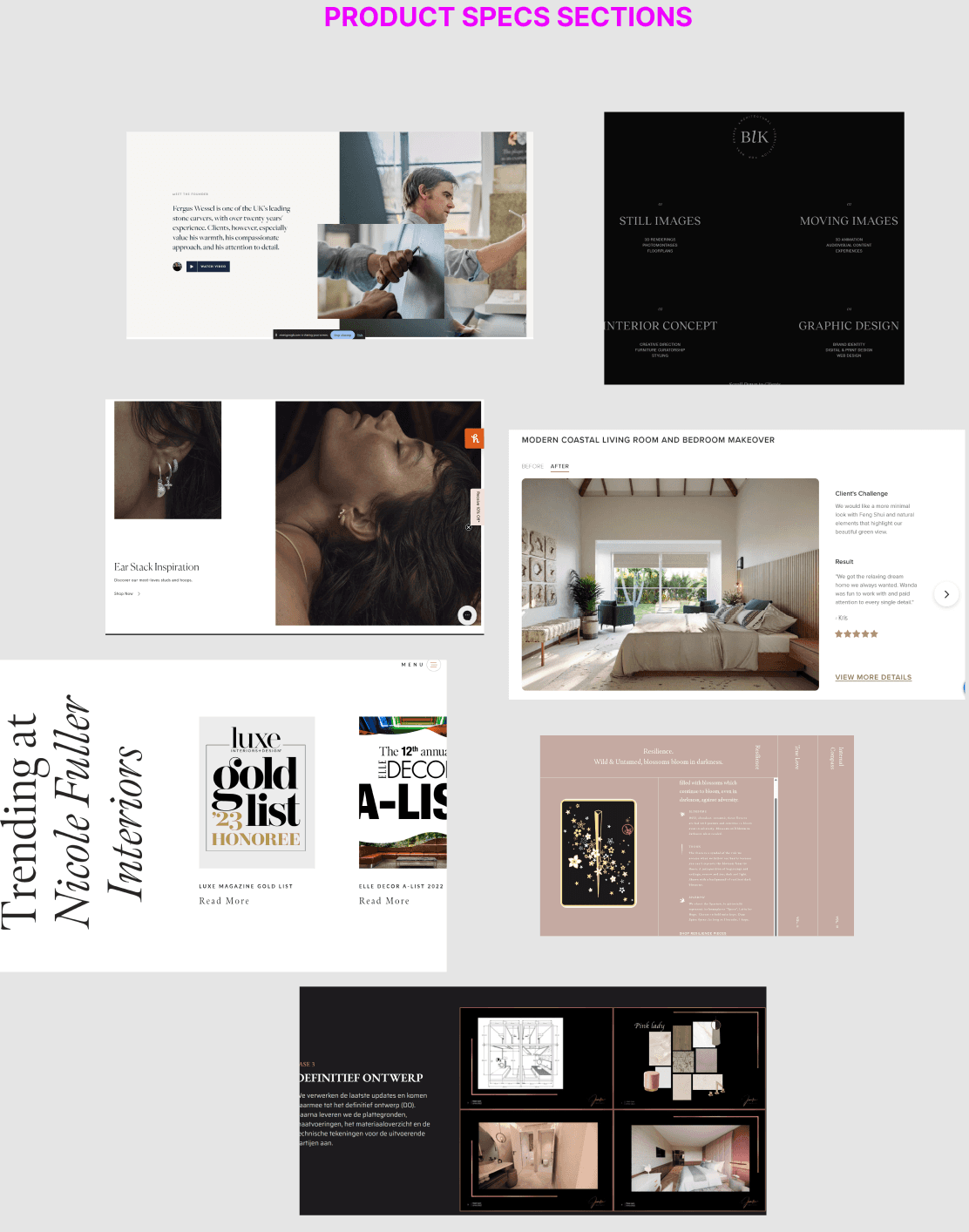
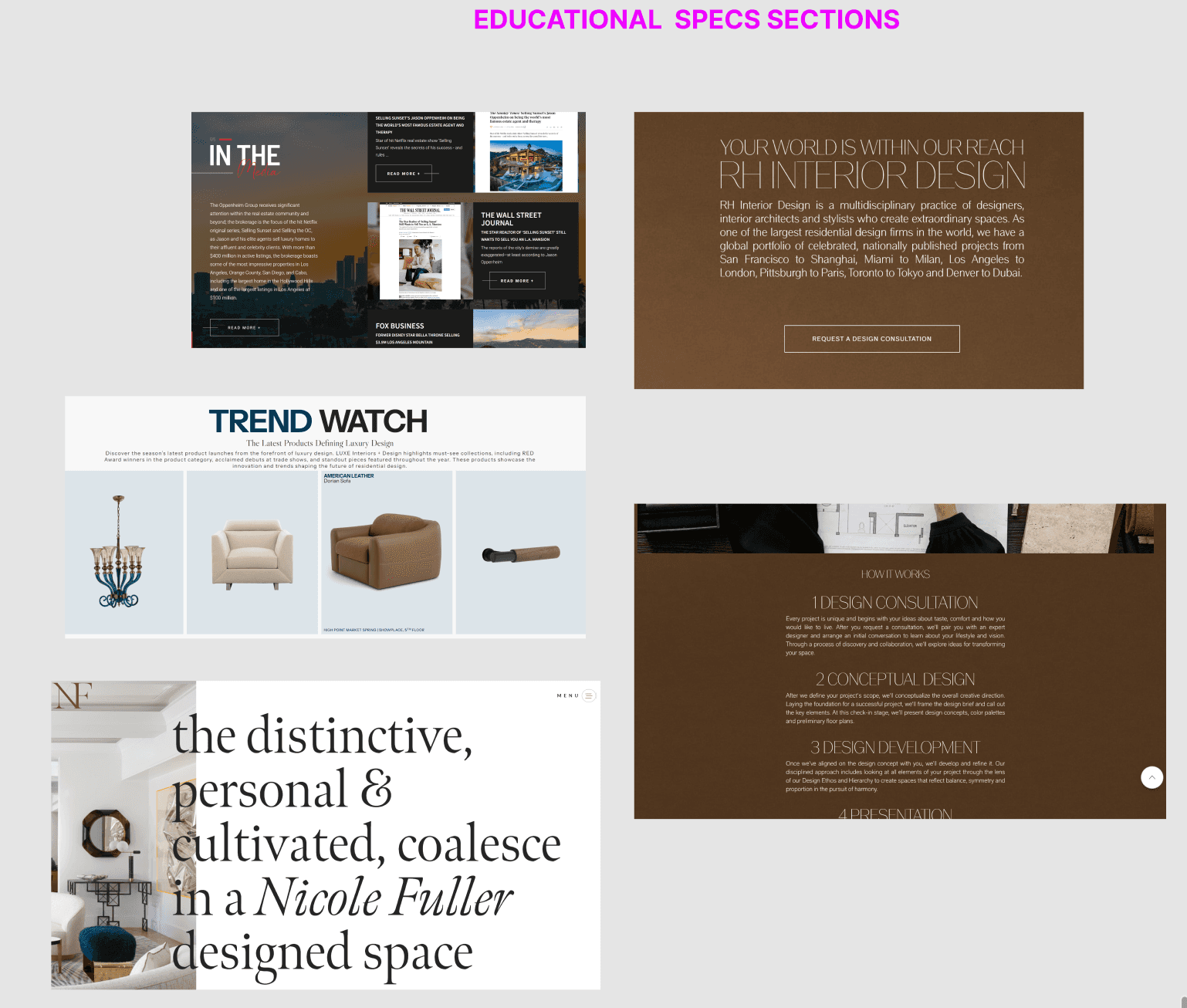
I researched over a dozen competitor brands, from every area of the luxury interior space. I looked for: speed claims, pricing transparency, install etiquette, material proof, tone.
Then I built a gap map: many say "premium," few show time certainty or publish what's included; almost none have brandable craft signatures.
Annotated Reference Library
To identify the patterns that consistently reduce friction, I found ledges, timelines, value ledgers, personalized features.
That gave me a parts list for a brand that feels inevitable and a page that moves a buyer forward.
Strategy
One Section = One Job
The strategy placed a single promise and four proof chips at the hero, then sequenced sections by the order of doubts a buyer actually has:
How fast
How much
How it’s built and installed
How I’m covered.
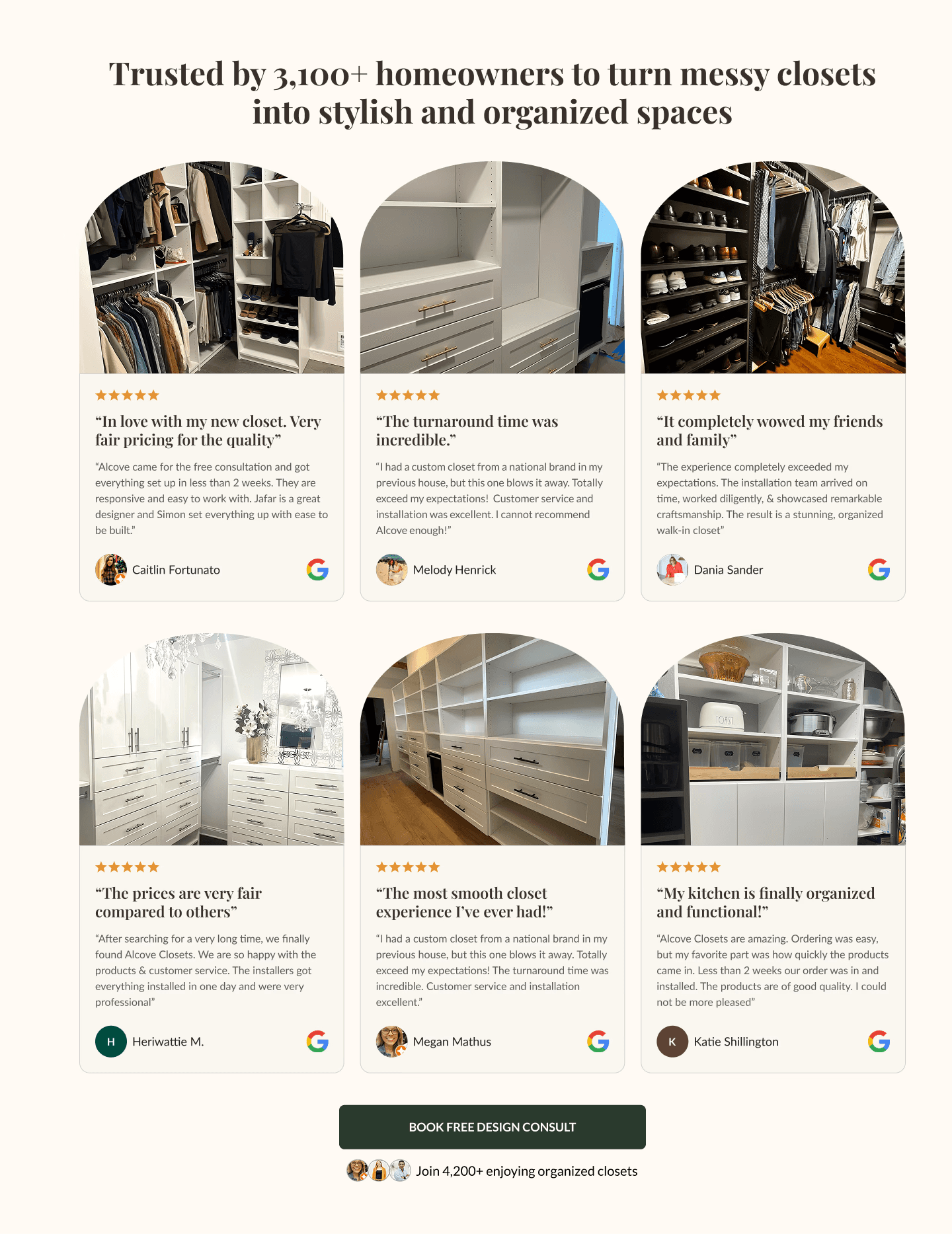
Maker’s marks translated craft into memory, a white-glove scorecard de-risked install day, and social proof was sprinkled throughout.
My reasoning was to make each section do one job, measurable by one or two behaviours.
I matched each section to an Alcove brand identity to keep the build honest and the narrative tight.
How Minimalism Unlocked The Brand
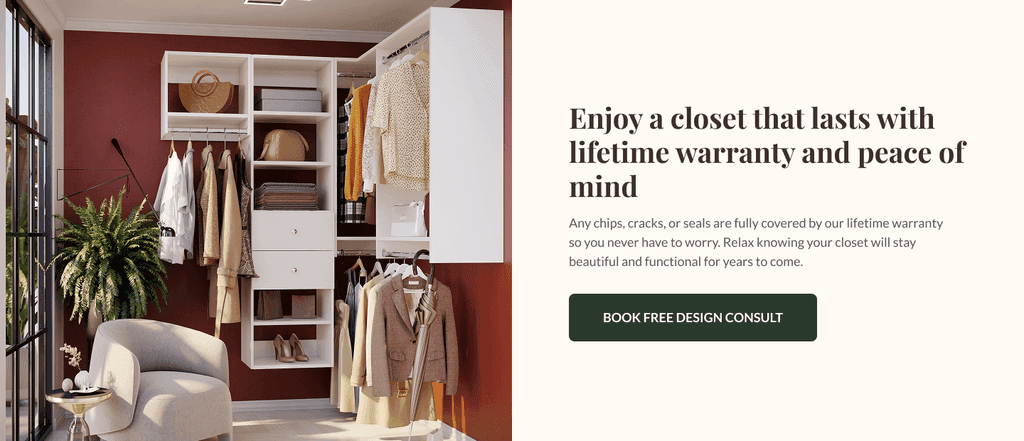
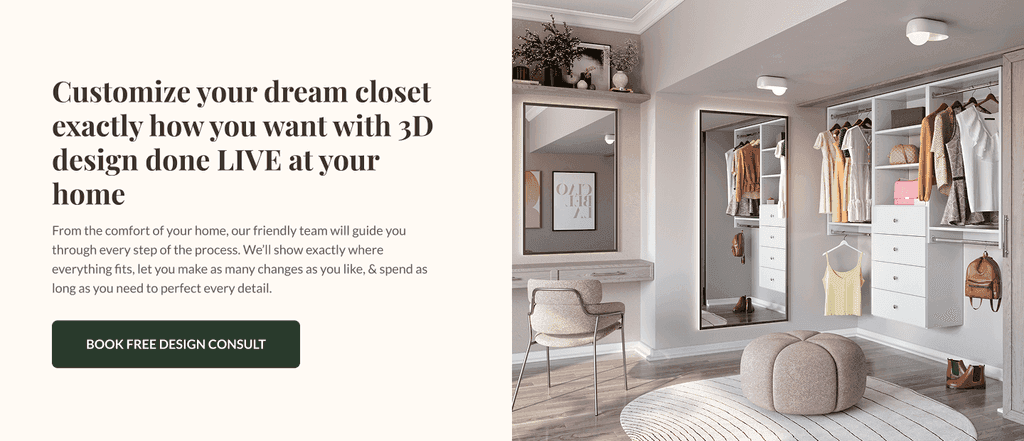
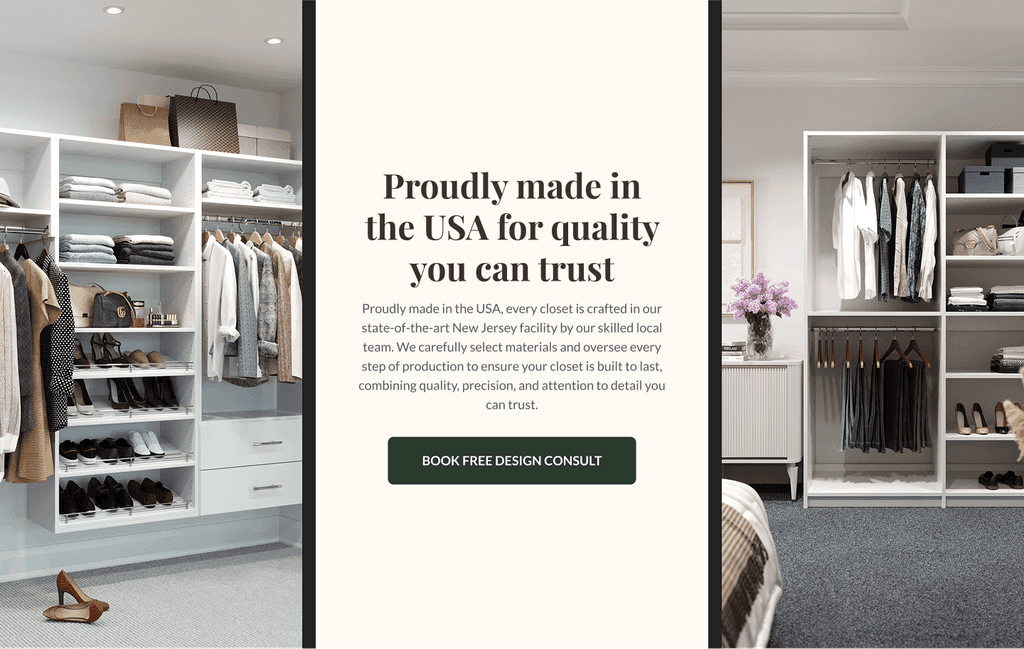
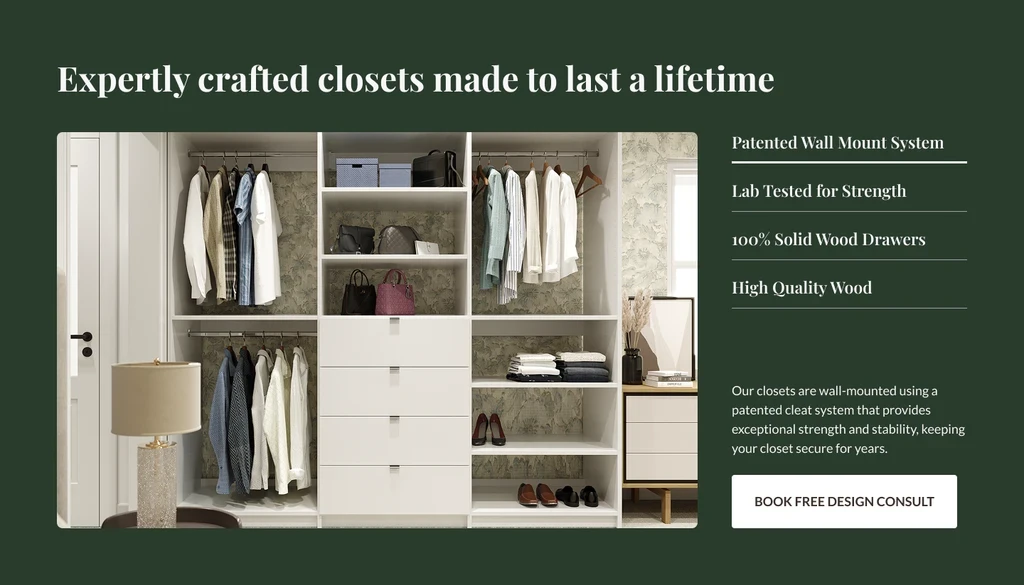
I built the identity to whisper, not shout. The palette is edited so real wood tones and crisp reveals take center stage.
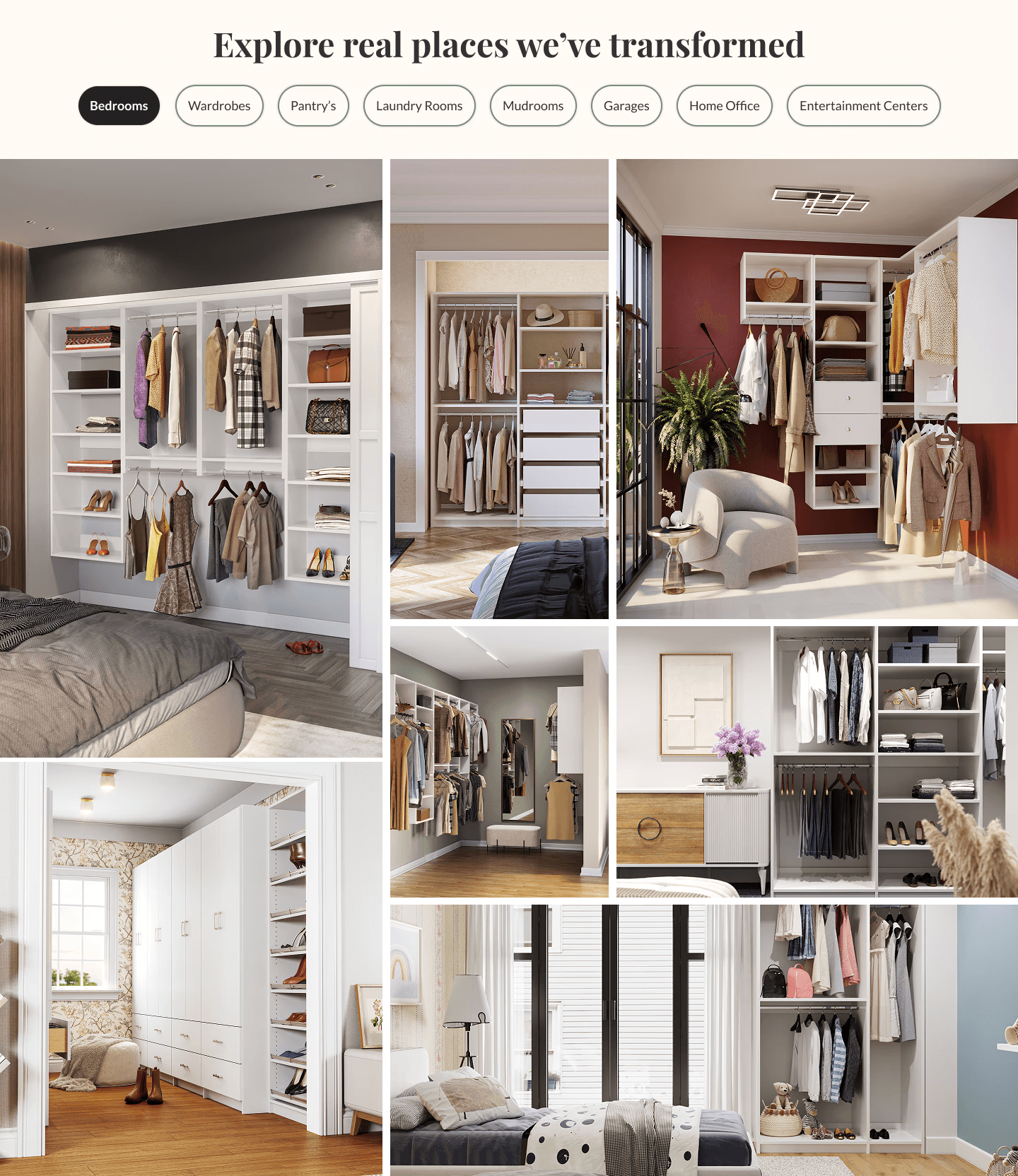
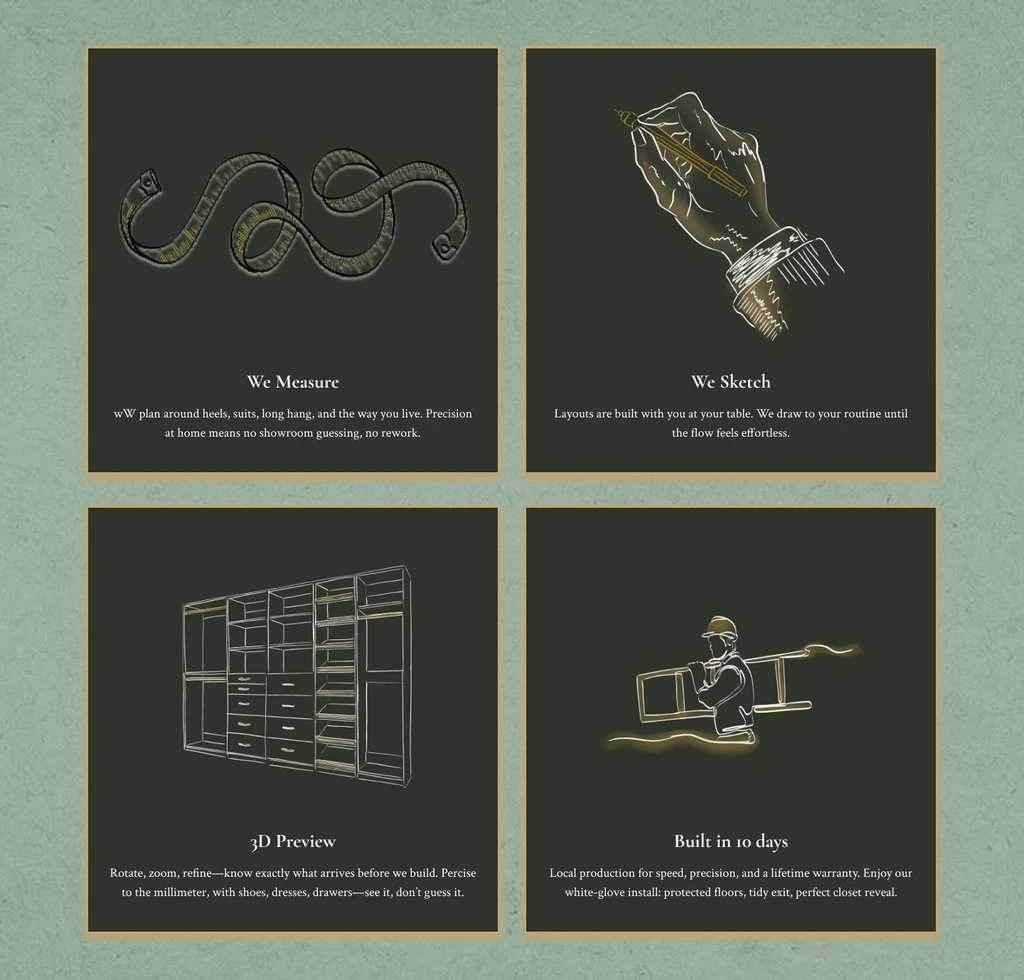
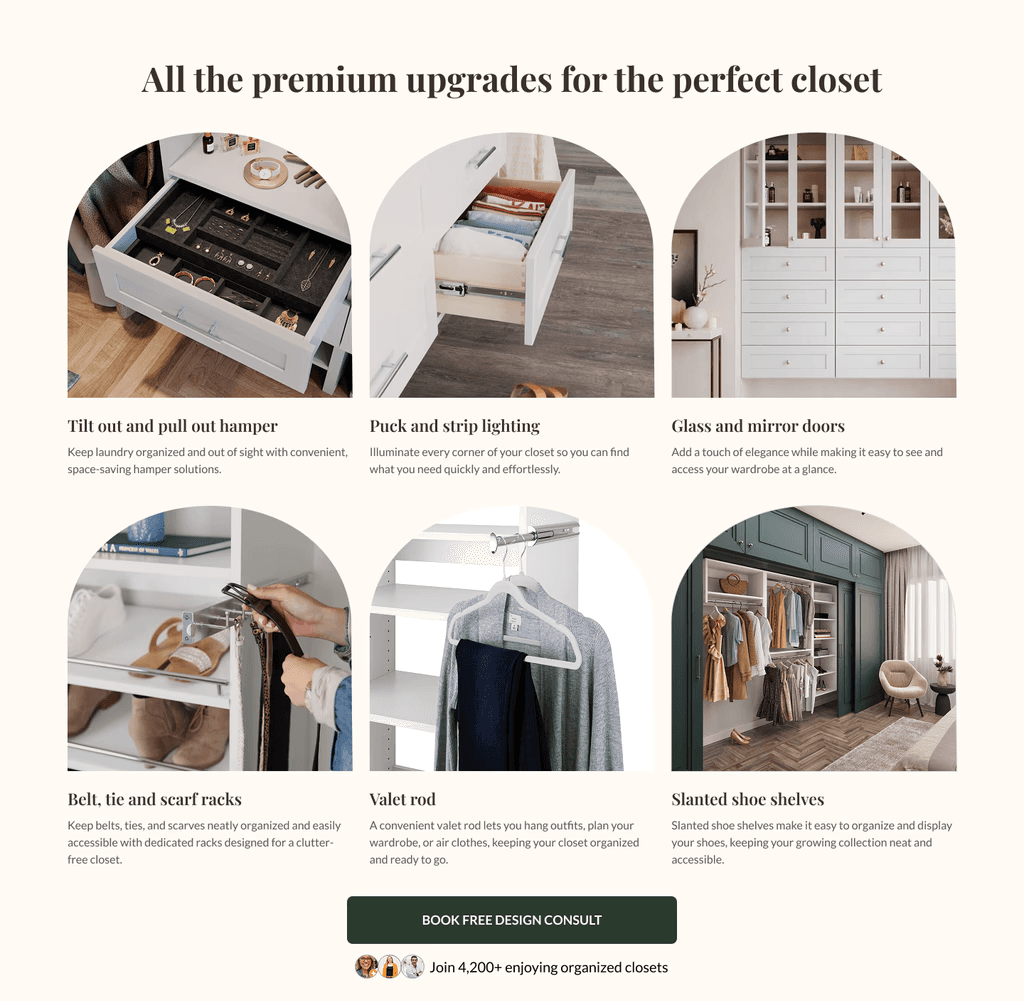
Iconography is custom, thin-stroke, and quiet: calendar-check for timeline certainty, shield-infinity for lifetime warranty. Alcove's editorial-level photography with macro "touch" closeups. I even used their 3D rendering files to showcase capacity or layout logic.
The intent was to let the product be the hero. Minimalism here isn't aesthetic fashion: stripping colour, noise, and extra copy meant user's attention moves to what matters: lines, edges, motion, and capacity.
That's how you make "luxury" legible without saying the word.
Why It Reads Luxe
With an edited palette, the negative space between the minimal designs became a brand asset, and the closets could “speak for themselves.” while having large, confident headings with disciplined body copy created that boutique calm that Alcove was initially missing out on displaying.
Having these design features allows for images to be used as proof and not wallpaper. Those iterations from V0 and Lovable allowed us to focus our energy on aspects that engage the entire user experience including creating something that simply feels enjoyable to scroll through.
CRO Execution
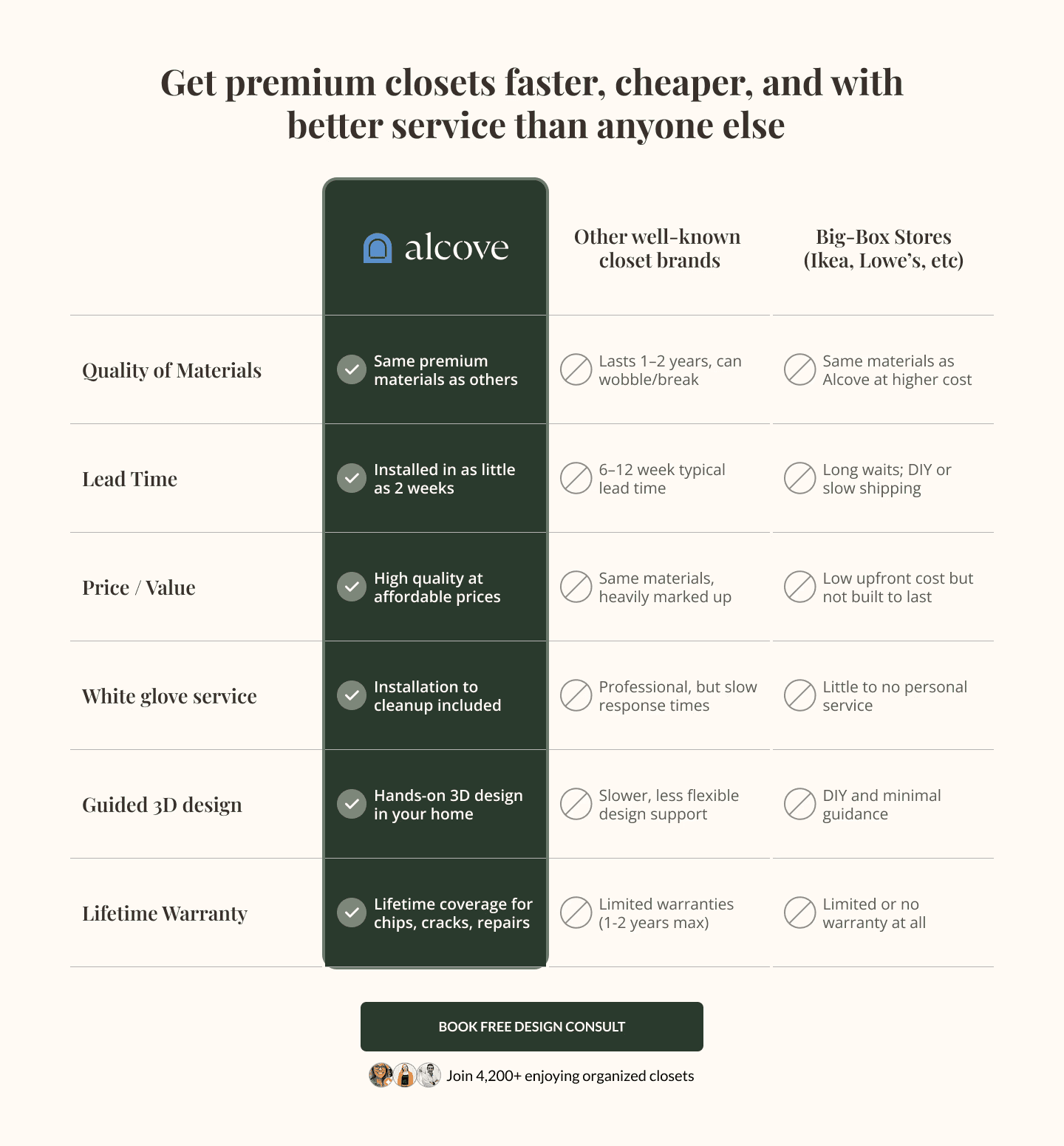
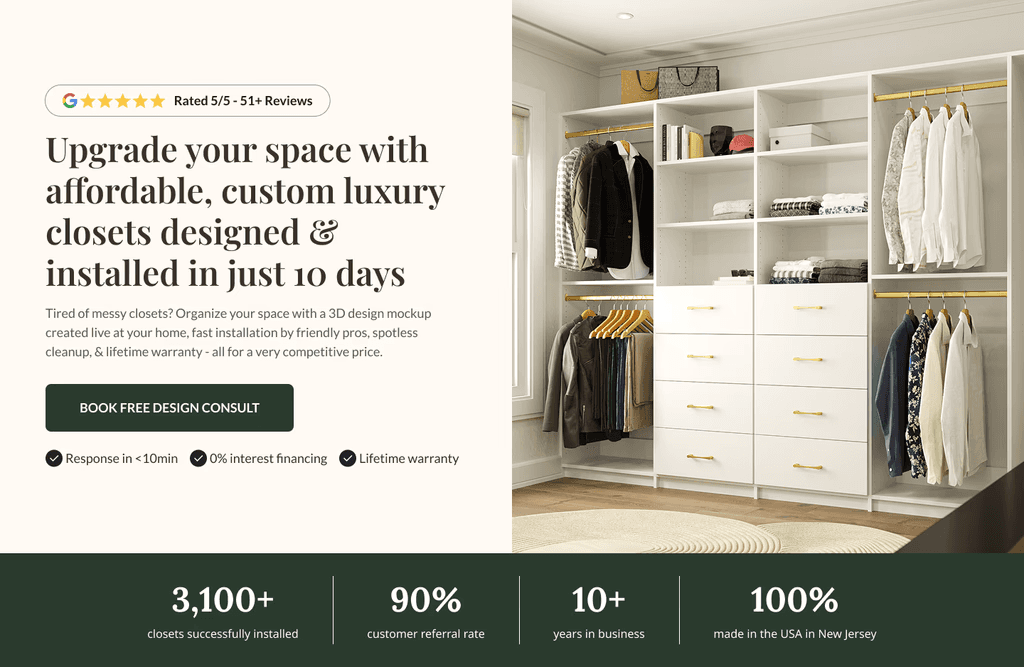
I rewrote Alcove's voice to reflect the calm the company delivers to its clients. The hero leads with a single promise and four proof chips so a first-time visitor can understand Alcove in one glance.
The price ledger provides typical installed ranges per space and a single line naming what’s included; the design, manufacturing, professional install, lifetime warranty: ending the “what am I really paying for?” loop. Instead of a feature list, I created Alcove’s maker’s marks so the craft is something you can feel and remember.
The detail grid shows micro-detail image crops; I moved specs to sit near CTAs, where they convert, not on top of the imagery, where they clutter.
My writing approach was to make every line carry either evidence or ease. If a sentence didn’t reduce cognitive load, disarm an objection, or make the click feel inevitable, it was cut. Luxury comes from restraint; conversion comes from clarity. The copy had to do both simultaneously. We trimmed choices to three timeless finishes and a handful of clear sections (time advantage, pledge, value ledger). Fewer decisions lead to a faster yes, which feels premium because it feels considered.
Design Refinement And Feedback
Feedback and Iterations
During the end of week critique meetings, the feedback confirmed the brand needed quieter confidence, so I limited the colour palette to be less loud and more guiding attention with the use of bold colours. I also found interest in using arched frames for sections that felt too boxed-in and clunky.
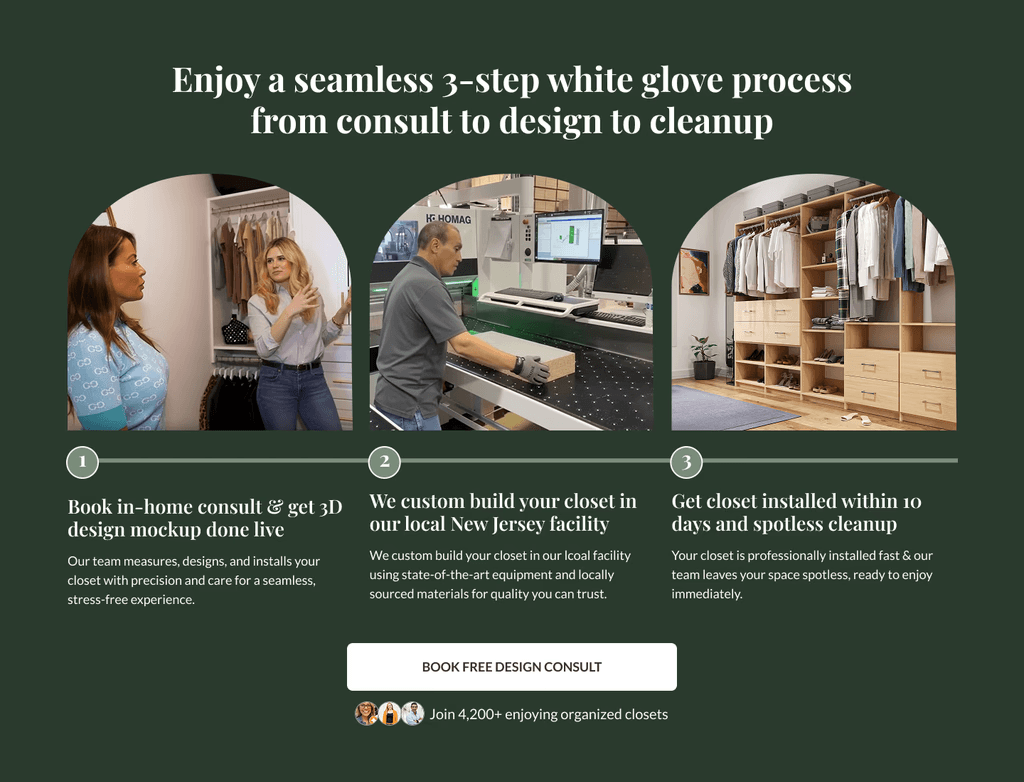
The hero matured from tasteful to decisive once we surfaced in-home design and timeline certainty in the first viewport. The process timeline settled into 3 milestones with generous spacing - certainty you can read at a glance.
My mindset here was to treat critique as a data source. If a stakeholder asked for calmer visuals, I asked what decision was being slowed and removed the blocker. If copy sounded generic, I replaced it with exciting proof and buzz words to gain back user attention. Every refinement tied back to a behaviour we intended users to make. By the end, the closets looked better, the copy said less but meant more, and the path to “book a consult” felt obvious.
Workflow Innovation
Lovable and V0 gave me fast iterations for everything I needed to be inspired for—layout variations between battling ideas, section sequences for planning what to put where for a seamless user journey, and copy roughs—that I could immediately critique and replace with handcrafted versions in the brand's voice.
I maintained comparison frames and a change log so feedback calls focused on decisions and predicted impact, not taste.
The rationale was to spend time where it moves KPIs: copy positioning, section sequencing, proof hierarchy. Automation handled the tedious parts (flow, variants, copy), freeing time for high-impact changes and experiments with the beauty aspect of the brand design.
What Was Hard
Nailing the brand’s aura from the homepage alone without a showroom or decades of perfect close ups and visuals meant the images and testimonials we did have access to had to do the heavy lifting. Early directions felt either too decorative (pretty but noisy) or too corporate (clean but bland). The breakthrough came when we stopped trying to decorate luxury and started framing it.
Reflection
This project taught me how to make “luxury” legible in a crowded category with three simple principles: show fewer, better choices; move proof to the top; and let the product convey its own message.
The workflow lesson was just as valuable: build fast iterations with AI while editing and refining by hand; measure the right moments; and keep a visible chain of decisions so everyone sees why the design feels inevitable.
Principles I’ll reuse for “luxury” brands:
Luxury is restraint plus evidence
Quiet typography, edited colour, and early proof (timeline, warranty, materials) beat heavy decoration every time.
Let the product be the hero
Design the frame so it disappears; the craft becomes the content.
Curate the path
Fewer, clearer choices with confident microcopy convert better and feel more premium than feature lists
The deeper lesson was that brand and CRO aren’t rivals. When they’re aligned (copy that guides users, sections that answer real objections, visuals that respect materials), you get a site that feels boutique and behaves like a salesperson. That’s the bar I’ll hold for future work.